
Join a supportive community of clinicians through Group Reflective Mentoring.
Come together as a group
July registrations now closed
Register your interest for our upcoming groups
Small groups, online, once a month
Group Reflective Mentoring
You’re good at what you do, but you feel like you’re working it out on your own.
You feel all alone with your questions, with no where to share them out loud…….
This is a small group, online, meeting once a month for an hour. It’s reflective mentoring, a space to step back and think about your own practice, alongside a handful of like-minded clinicians at a similar point in their careers. We come together as a group, we talk honestly, and we discover, again and again, how much we actually share.
It’s built for mid-career clinicians, roughly five to fifteen years in, who want two things at once: deeper insight into their own practice, and genuine connection with others who understand the work from the inside.
There’s something a group does that one-to-one can’t. When one person says the quiet thing out loud, it gives everyone else permission. That’s where vulnerability lives. And vulnerability, shared in a room that feels safe, is what builds courage. Courage builds trust. And trust is what lets us get honest about the things that matter most: how we look after ourselves, how we serve our clients, and how we show up for our colleagues.
Once a month.
An hour at a time.
Online, so it fits around the clinic.
Kept intentionally small, so every voice has room.
Our Services
-
Our July group is now closed, and new groups are forming for upcoming start dates. We meet once a month for an hour, online, so it sits gently inside your day. The group is small and stays together across the six months, which is what lets the trust build.
-
The full six-month program is $1,158 + GST, an introductory rate while the first groups get underway. That works out to roughly the cost of seeing six clients: a very small price for what you’ll carry into every client you see afterward. As professional development, it’s typically claimable at tax time (your accountant can confirm). Mostly, though, it’s an investment in you.
-
Pop in your preferred day and time, and I’ll match you to the best upcoming group.
A little about me
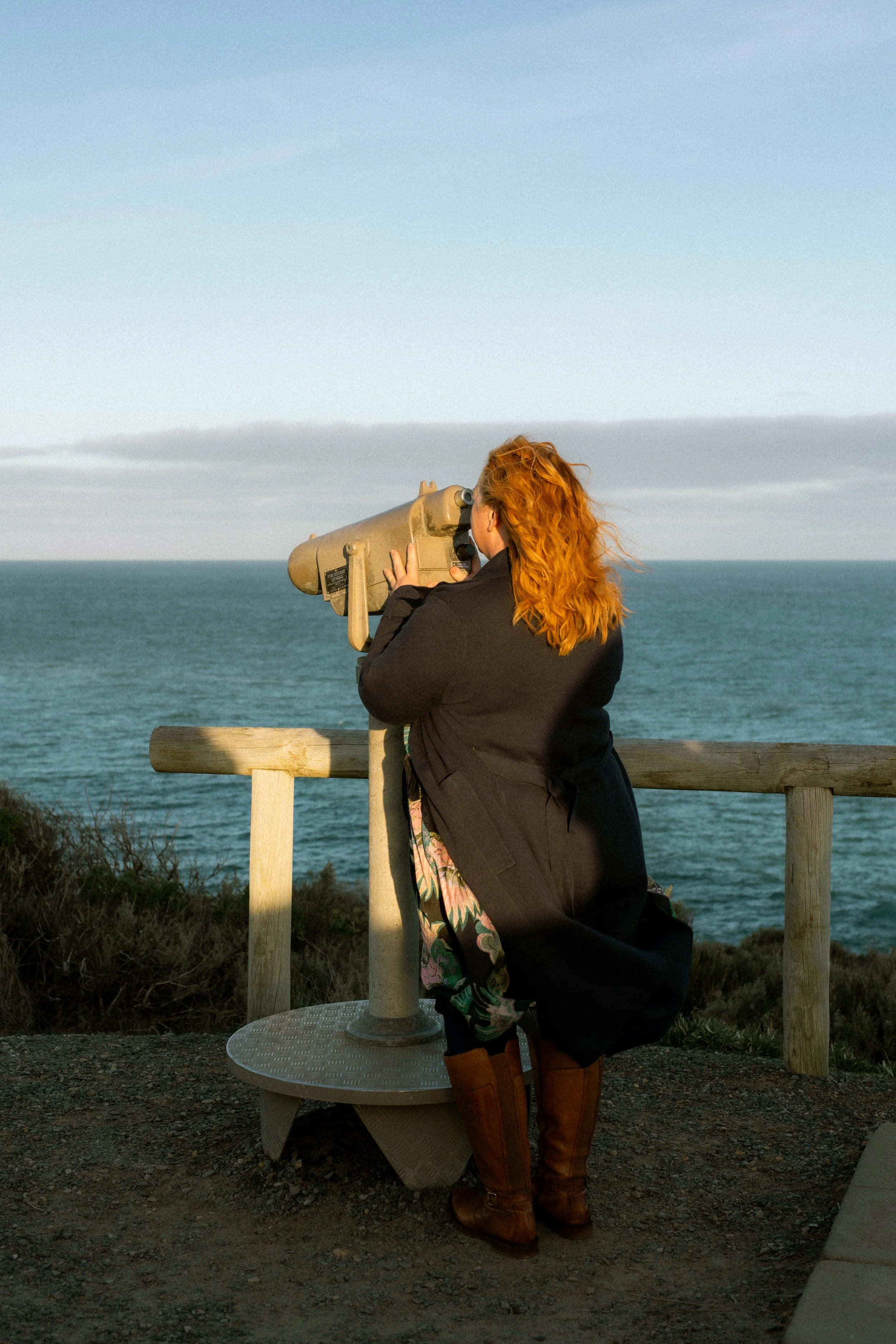
I fell in love with reflective practice a good ten years ago. The more I leant into it, the better my relationships became with the people I supported, and the clearer I got about my own place in the workforce. That sparked a hunger for more. I started a diploma in counselling, did all the theory, and never quite finished the practical. Anyone who knows me will tell you that’s very on-brand: for me it’s always been more about the knowledge than the certificate.
Some of what I bring also comes from lived experience. There’ve been seasons that pushed my own health and wellbeing, and sent me looking, properly looking, for tools that actually help. Self-regulation, understanding my nervous system, learning to work in a trauma-informed way. I don’t share that to make it about me; I share it because it’s the reason I care so much about clinicians having somewhere safe to land.
Off the clock, I’m a mum and a solo parent to a teenage boy and two small, very opinionated dogs. We live in a little coastal town in South Australia, and I spend a good chunk of my week on the road seeing my paediatric clients. These days I specialise in paediatric orthotics, with a real soft spot for digital workflow.

1 — You'll gain a sustainable way to practise
Learn to spot the specific risks in your caseload before they pile up, set boundaries that actually hold, and pace your work so it's something you could keep doing for the next twenty years — not the next two. You'll leave with a personal sustainability system, not just good intentions.

2 — You'll learn to stay in your “Zone of Fabulousness”
Vikki Reynolds describes the Zone of Fabulousness as the space where we do our best work. In this programme you'll learn to recognise when you're drifting out of it — into cynicism on one side or over-giving on the other — and gain a group of peers who help pull you back. You'll discover that resilience isn't something you white-knuckle alone; it's collective, and it's learnable.
3 — You'll build real resilience skills
Gain practical tools you can use between patients and at the end of a hard day: nervous-system regulation, cognitive flexibility, decompression routines, and ways to contain difficult clinical material without carrying it home. You'll learn to read your own early warning signs — and know exactly when to reach for more support.

4 — You'll gain a room of people who get it
Learn alongside clinicians who understand the specific weight of this work. You'll reconnect with the meaning that brought you here, practise reflection as a skill rather than an afterthought, and gain something most CPD can't offer: belonging. Not a webinar you watch alone — a community you return to.